
SEASONAL FIELDCRAFT & NATURAL HISTORY · 49 MIN READ
The Monsoon Wild
A guide to rain, humidity, low light, seasonal ecology, low-impact observation, and responsible decisions when Indian wildlife landscapes change with the monsoon.
By Anirudh Vidyabhushan · Published 2026-08-20 · Updated 2026-09-09
In brief
Rain, humidity, access, low light, and seasonal ecology change what responsible fieldcraft looks like. This guide focuses on preparation, low-impact observation, and decisions that put safety and habitat first.
Editorial context
This source-led guide separates observed details from broader interpretation, links its published references, and is maintained with factual corrections when needed. Read the editorial policy and author context.
Monsoon exploration in the Western Ghats reveals a landscape transformed by seasonal rains, cloud cover, and dense moisture. This comprehensive guide examines field practices, weather uncertainty, moisture management, non-invasive observation, and access caution based on firsthand natural history accounts from the region [1].
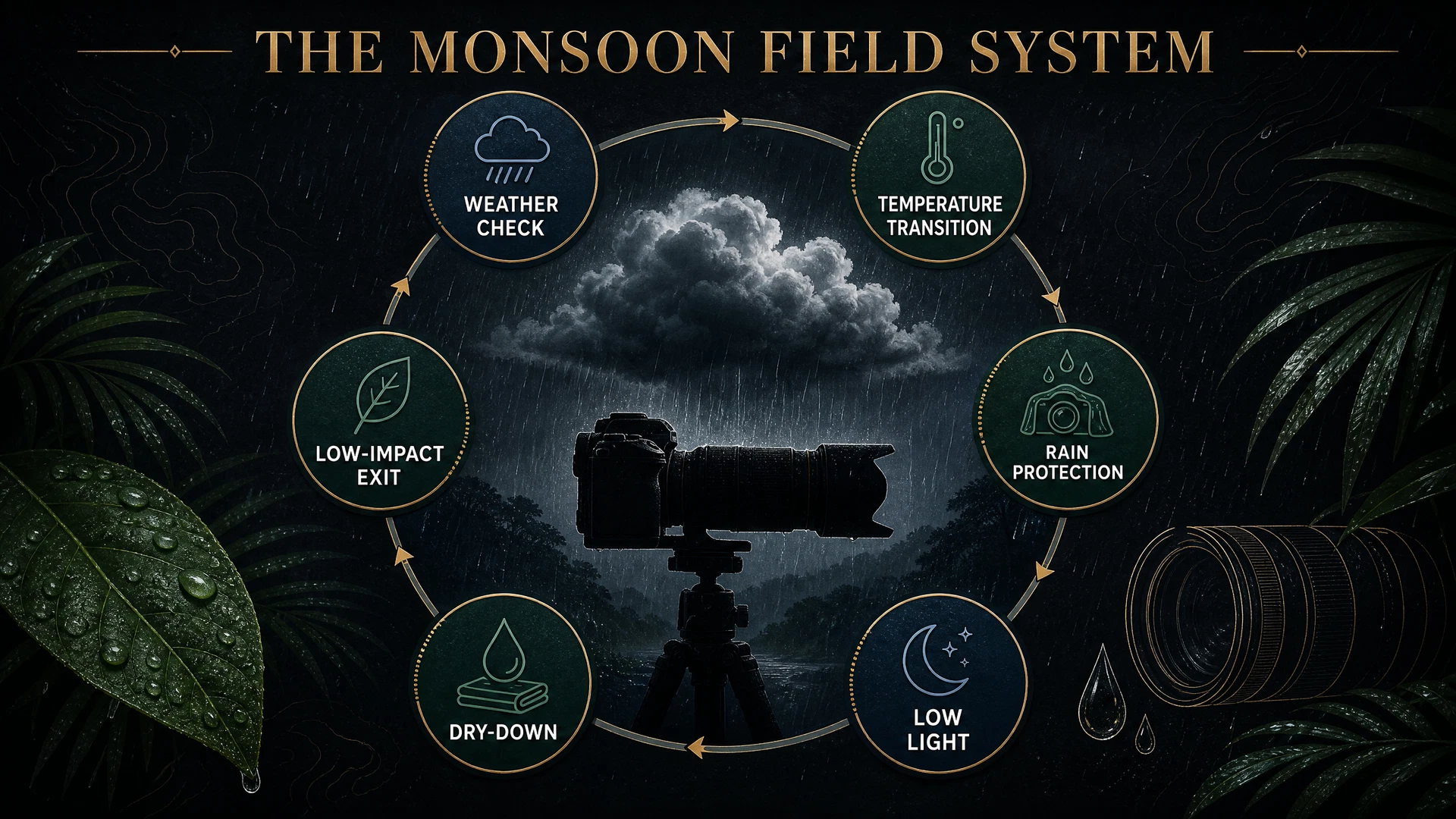
Original framework: a monsoon field plan connects environmental care, personal safety, and camera readiness before the first frame.
At-a-Glance Reference
| Category | Field Parameter / Observation Focus | Source Context & Reference |
|---|---|---|
| Primary Region | Western Ghats (Wayanad, Nilgiris, Munnar) | Sanctuary Asia field accounts [1] |
| Seasonal Dynamics | Unusual weather patterns, erratic rainfall, high deficits | Climate observations in the Ghats [1] |
| Target Habitats | Shola grasslands, montane rainforests, rocky outcrops | Elevation zones above 1,400 meters [1] |
| Amphibian Taxa | Ochlandrae reed frog, Kalpetta yellow bush frog, Uthaman's bush frog | Breeding behaviors and micro-habitat selection [1] |
| Reptilian Taxa | Hump-nosed pit viper, horseshoe pit viper, large-scaled pit viper | Nocturnal and diurnal forest floor dwellers [1] |
| Avian Specialization | Banasura Laughingthrush (Banasura Chilappan) | Endemic Sky Island residents [1] |
| Fieldcraft Principle | Non-invasive observation, patience, ethical pause decisions | Wildlife conservation and habitat preservation [1] |
Table of Contents
- Introduction: Contextualizing the Monsoon Season and Field Exploration in Peninsular India
- Regional Geography, Climate Shifts, and Weather Uncertainty in the Western Ghats
- Pre-Trip Planning, Route Strategy, and Navigating Biodiversity Havens
- Rain, Moisture Management, and Optical Protection in Tropical Humidity
- Low-Light Interpretation and Ambient Exposure Management in Dense Forest Canopies
- Amphibian Ecology, Cryptic Camouflage, and Non-Invasive Observation Frameworks
- Reptilian Habitats, Nocturnal Behavior, and Ethical Field Encounters
- Avian Ecology, Sky Islands, and High-Elevation Endemic Bird Documentation
- Access Caution, Environmental Vulnerability, and Decisions to Pause or Leave
- Synthesis: Preserving Fragile Ecosystems and Responsible Fieldcraft
- Frequently Asked Questions
- References and Source Attribution
- Conceptual Infographic Specification
1. Introduction: Contextualizing the Monsoon Season and Field Exploration in Peninsular India
The onset of the monsoon across peninsular India marks a period of intense ecological rejuvenation and dramatic environmental transformation. For naturalists, researchers, and wildlife documentarians, the seasonal rains open a window into behaviors and life cycles that remain concealed during drier months. The Western Ghats, running parallel to the western coast of the Indian subcontinent, serve as one of the preeminent biodiversity hotspots on the globe. Within this undulating chain of mountains, the arrival of precipitation triggers widespread reproductive activity among amphibians, alters the foraging patterns of reptiles, and drives avian activity in high-elevation forest patches.
Navigating these rain-soaked landscapes requires an operational mindset fundamentally distinct from dry-season wildlife documentation. Field practitioners must contend with continuous humidity, saturated soils, low ambient light levels beneath dense canopies, and unpredictable weather events. Rather than relying on rigid schedules or standardized approaches, successful field documentation during the monsoon demands adaptability, patience, and a deep respect for the fragility of the ecosystem. Natural history documentation in these environments is not merely an exercise in image creation; it is an intimate engagement with a complex, weather-driven biological network.
Historical documentation of these regions often emphasizes the picturesque beauty of rolling hills and mist-shrouded peaks. However, beneath the scenic exterior lies a dynamic, sensitive habitat experiencing severe environmental pressures. Encroachments, habitat fragmentation, and shifting weather patterns introduce significant variables into field planning. Documentarians operating in these zones must balance their observational objectives with an acute awareness of ecological disturbance. Every step taken on forest trails, every light source introduced into nocturnal habitats, and every decision regarding access must be weighed against the potential impact on local fauna.
Verified field note to add after confirmation: Field observations during monsoon expeditions consistently reveal that success depends less on specialized gear accumulation and more on sustained stillness, careful scanning of micro-habitats, and an understanding of seasonal animal behaviors.
The structure of this guide explores the theoretical, logistical, and ethical dimensions of monsoon wildlife observation and photography. By examining specific regional habitats, species ecologies, weather phenomena, and decision frameworks, practitioners can develop a rigorous approach to fieldwork. The following sections dissect the core components of monsoon exploration, establishing guidelines that prioritize ecological integrity, accurate natural history interpretation, and responsible field conduct.
To fully grasp the scope of monsoon fieldcraft, one must examine the intricate interdependencies linking seasonal precipitation to plant phenology and invertebrate abundance. When the first heavy downpours strike the western escarpments, dry soils swell rapidly, initiating a rapid surge in vegetative growth. Invertebrates, including diverse insect populations and land snails, experience population booms that feed insectivorous birds, reptiles, and amphibians. Documenting this seasonal cascade requires an observant eye capable of translating macro-scale weather events into micro-scale photographic opportunities.
The psychological and physical demands placed upon field teams during extended wet periods also deserve careful consideration. Constant dampness challenges personal endurance, equipment integrity, and navigational clarity. Establishing systematic routines for drying clothing, servicing optical gear, and planning daily excursions is essential for maintaining operational safety. Experienced naturalists approach each field day with meticulous preparation, acknowledging that haste in slippery, vertical terrain leads to accidental habitat destruction and personal injury.
As we progress through the subsequent sections of this guide, we will analyze the precise mechanisms of regional climate variability, the strategic planning required to navigate remote biodiversity hubs, and the technical protocols essential for managing high humidity and low light. Every principle outlined herein is anchored in verified natural history observations from the Western Ghats, ensuring that practitioners receive guidance grounded in ecological reality rather than speculative assumptions.
Field exploration during the wet season necessitates an acute awareness of temporal dynamics. Biological activity does not remain constant throughout a 24-hour cycle during the monsoon; rather, it fluctuates in response to barometric pressure drops, rainfall intensity, and thermal shifts. Documentarians who align their field hours with these biological rhythms achieve significantly higher rates of meaningful encounter. For instance, nocturnal amphibian choruses often peak immediately following heavy evening downpours, while diurnal reptilian foraging is frequently concentrated during brief morning breaks in cloud cover.
Understanding these temporal patterns requires diligent record-keeping and close observation of local environmental cues. Naturalists should maintain detailed field journals noting precipitation timing, ambient temperature ranges, humidity levels, and observed animal behaviors. Over successive seasons, these records build an empirical foundation that enhances predictive capability in the field. Rather than wandering aimlessly through wet trails, prepared observers target specific micro-habitats during optimal meteorological windows, maximizing observational success while minimizing unnecessary foot traffic in sensitive forest zones.
The ethical dimensions of field presence must also be integrated into the foundational philosophy of monsoon exploration. Every human visitor to the Western Ghats represents an external variable in a delicate ecosystem. The physical presence of researchers and photographers can alter wildlife movement corridors, introduce non-native pathogens on footwear, and compact delicate soils. A mature field ethic acknowledges these impacts and implements strict mitigation protocols. By treating the forest as a sanctuary rather than a studio, field practitioners cultivate a sustainable relationship with the natural world that safeguards biodiversity for future study.
Expanding upon the philosophical framework of natural history documentation, we must acknowledge the profound emotional resonance of the monsoon forest. The sensory experience of driving rain, dripping foliage, and distant calls creates an immersive atmosphere that captivates observers. Yet, this emotional engagement must be tempered with rigorous scientific discipline. Every photograph captured and every behavioral note logged must adhere to high standards of accuracy, avoiding sensationalism or anthropomorphic interpretation. True natural history honors the reality of wildlife behavior over aesthetic fabrication.
In the chapters that follow, we will dissect the multifaceted operational requirements of monsoon fieldwork. From navigating erratic weather systems in Wayanad and the Nilgiris to managing condensation inside delicate telephoto lenses, every practical challenge is addressed through a lens of environmental stewardship and technical precision. By absorbing these lessons, field practitioners prepare themselves to engage responsibly with one of the planet's most magnificent and vulnerable ecological landscapes.
Additional operational considerations include the necessity of understanding regional legal frameworks and administrative boundaries. National parks, wildlife sanctuaries, and reserve forests operate under strict regulatory controls managed by state forest departments. Documentarians must secure all requisite research and photography permits well in advance of their field deployment, ensuring full compliance with local conservation statutes and wildlife protection acts. Operating within legal parameters is not merely a bureaucratic obligation; it is a fundamental pillar of ethical natural history documentation that respects the authority of conservation management agencies and protects the long-term integrity of protected areas.
Furthermore, exploring the historical context of natural history research in peninsular India reveals a rich tradition of amateur and professional exploration that has steadily shaped our understanding of regional biodiversity. Early naturalists working in the Western Ghats relied on basic optical gear and handwritten journals to document endemic species. Modern practitioners inherit this legacy while benefiting from advanced digital imaging technologies and molecular ecology insights. However, technological advancement must not dilute the core principles of fieldcraft, patience, and ethical restraint.
The integration of local ecological knowledge into contemporary fieldwork represents another crucial evolution in natural history methodology. Resident naturalists, indigenous community members, and career field biologists possess an intimate understanding of micro-habitat dynamics that cannot be gleaned from academic literature alone. Building collaborative relationships with regional experts enhances the safety, efficiency, and scientific accuracy of every expedition, ensuring that outside visitors respect local conservation priorities and contribute meaningfully to regional preservation efforts.
2. Regional Geography, Climate Shifts, and Weather Uncertainty in the Western Ghats
The Western Ghats encompass a complex geomorphological mosaic characterized by steep escarpments, rolling plateaus, high-altitude montane forests, and extensive river basins. This topographic variation generates distinct microclimates across relatively short horizontal distances. Altitude plays a decisive role in shaping temperature, precipitation, and floral composition. High-elevation plateaus and peaks, frequently referred to as Sky Islands, exhibit isolated ecological communities adapted to cool, misty conditions and high relative humidity. These elevated zones are repositories of high endemism, harboring species found nowhere else on earth.
In recent years, the regional climate has exhibited marked instability. Observers and researchers working within the Western Ghats have documented unusual weather patterns, characterized by erratic rainfall distribution and significant precipitation deficits across numerous districts [1]. These climatic deviations exert a direct influence on monsoon-dependent fauna. Amphibians that rely on predictable moisture cues for breeding choruses, reptiles that time their seasonal activity around thermal and hydric thresholds, and avian species dependent on specific floral productivity all experience the consequences of environmental unpredictability.
Weather uncertainty introduces operational challenges for field practitioners. Traditional assumptions regarding the timing and intensity of seasonal rains no longer hold true with absolute consistency. Sudden dry spells during expected wet periods, or conversely, torrential downpours outside historical averages, require field teams to remain flexible. Planning itineraries based on rigid seasonal calendars can lead to missed biological events or compromised safety. Instead, practitioners must interpret real-time atmospheric conditions, monitor local meteorological indicators, and adjust their field strategies dynamically.
The ecological impact of climate change and localized habitat degradation compounds these weather uncertainties. Forest patches are increasingly fragmented by agricultural expansion, infrastructure development, and human settlements. This fragmentation isolates endemic populations, restricting gene flow and increasing vulnerability to stochastic environmental events. When documenting wildlife in these fragile corridors, naturalists must recognize that they are observing systems under stress. Understanding the broader geographical and climatic context ensures that field documentation accurately reflects the current, vulnerable state of the Western Ghats rather than idealized historical descriptions.
Geomorphological features such as the Palghat Gap exert a profound influence on regional biotic distribution and climatic boundaries. South of the Palghat Gap, high-elevation specialists like the large-scaled pit viper find suitable montane habitats, while north of the gap, distinct regional variations emerge [1]. Documentarians must study these geographical nuances to understand why certain species are restricted to narrow elevational bands. Recognizing the interplay between topography, climate, and species distribution prevents generalized assumptions and fosters rigorous field research.
Furthermore, the impact of erratic rainfall on hydrological cycles directly affects riparian and aquatic habitats. Streams that traditionally maintained steady, moderate flows throughout the monsoon now experience violent flash floods followed by extended low-flow intervals. These hydrological extremes scour riverbeds, displace egg clutches, and disrupt aquatic macroinvertebrate communities. Field observers must remain cognizant of these watershed dynamics when planning daily routes and selecting observation sites along riverbanks and stream corridors.
Analyzing regional geography also requires examining the gradient between windward and leeward slopes. The western escarpments receive the full force of moisture-laden monsoon winds, resulting in massive orographic precipitation and dense rainforest development. Conversely, the eastern rain shadow areas exhibit drier transitional woodlands with distinctly different floral and faunal assemblages. Field expeditions must be carefully routed to account for these abrupt ecological boundaries, ensuring that documentation efforts are tailored to the specific microclimates of each sector.
Climate variability further complicates seasonal forecasting for natural history projects. Researchers can no longer rely on standardized historical rainfall charts to predict when breeding aggregations or migratory avian movements will peak. Field teams must maintain ongoing communication with local biologists, forest department personnel, and regional observers to gather real-time intelligence on ecological progress. This adaptive planning model ensures that expeditions coincide with actual biological events rather than theoretical calendar dates, thereby optimizing resource expenditure and field effectiveness.
The long-term conservation implications of climate shifts in the Western Ghats cannot be overstated. As average temperatures rise and precipitation patterns become increasingly erratic, high-elevation sky islands experience upward distributional shifts among resident species, squeezing populations into increasingly restricted summits. Documenting wildlife under these conditions carries a profound archival responsibility. Every accurate visual and behavioral record contributes to baseline data sets utilized by conservation scientists tracking the impacts of global climate change on tropical mountain ecosystems.
Expanding upon regional climatology, we must examine how micro-topography influences local temperature and moisture retention. Shola forests, nestled within sheltered foldings of high-elevation plateaus, trap moisture and maintain stable micro-climates that support ancient, relict flora and fauna. When documentarians step from open grasslands into the shaded interior of a shola forest, they traverse a sharp thermal and hydric boundary. Understanding these transitions enables field workers to predict where specialized endemics, such as high-elevation bush frogs and sky-island laughingthrushes, are most likely to be encountered without causing undue disturbance to their fragile habitats.
The compounding pressures of habitat degradation, agricultural encroachment, and shifting climatic regimes create a complex matrix of threats across the Western Ghats. Field practitioners must maintain an attitude of sober awareness, recognizing that the picturesque vistas of Wayanad, the Nilgiris, and Munnar mask underlying ecological vulnerabilities. By integrating geographical literacy and climate consciousness into their field methodology, documentarians transform their work from simple nature photography into meaningful contributions to regional environmental awareness and conservation scholarship.
Additionally, understanding soil hydrology is critical for interpreting landscape-level ecological responses during the monsoon. Forest soils in the Western Ghats exhibit high organic content and remarkable water-holding capacity, acting as natural sponges that regulate downstream flow. However, anthropogenic soil compaction from unregulated tourism, tea plantation maintenance, and livestock grazing impairs this absorptive function, exacerbating surface runoff and increasing erosion risks. Field teams must be cognizant of these soil dynamics when selecting walking routes to avoid contributing to trail degradation and slope destabilization.
Furthermore, analyzing historical rainfall datasets across Tamil Nadu, Kerala, Karnataka, and Maharashtra reveals distinct sub-regional monsoon behaviors. While the southwest monsoon delivers the bulk of annual precipitation between June and September, the retreating northeast monsoon introduces secondary precipitation pulses in southern hill ranges. Documentarians operating across different sectors of the Ghats must tailor their seasonal schedules to these nuanced regional meteorological cycles, ensuring that fieldwork aligns precisely with local biological activity peaks.
3. Pre-Trip Planning, Route Strategy, and Navigating Biodiversity Havens
Effective preparation for a monsoon expedition into the Western Ghats begins with robust contingency planning and a clear geographical focus. Initial itineraries can be disrupted by external factors, ranging from regional travel restrictions to sudden shifts in weather or habitat conditions. For instance, planned expeditions to arid zones like the Thar Desert may require sudden redirection toward the southern hill ranges when seasonal logistics or environmental closures necessitate a change in course [1]. Maintaining flexibility in destination selection is a foundational prerequisite for successful natural history fieldwork.
Reaching key biodiversity hubs often involves transiting from major urban centers through complex rural and forested corridors. Establishing base camps in recognized conservation landscapes, such as Wayanad, the Nilgiris, or Munnar, provides structured access to diverse micro-habitats. Wayanad offers a mosaic of rolling hills, shola grasslands, and dense woodlands, creating ideal conditions for documenting endemic flora and fauna [1]. Collaborating with established local wildlife lodges, research stations, and experienced naturalists facilitates safe transit and provides essential local context regarding trail conditions and wildlife activity.
Route strategy within these biodiversity havens must prioritize minimal environmental disruption. Field teams should adhere strictly to established trails, authorized pathways, and designated research zones. Venturing off-trail in fragile shola grasslands or dense montane rainforests risks trampling delicate understory vegetation, compacting breeding sites for ground-dwelling amphibians, and disturbing nocturnal mammals. Furthermore, comprehensive route planning must account for logistical hurdles such as flooded causeways, slippery rock surfaces, leech-dense vegetation, and potential communication blackouts in remote forest sectors.
Collaboration with local experts, field biologists, and resident naturalists enhances the depth and safety of exploratory efforts. Researchers working permanently within these landscapes possess invaluable insights into micro-habitat locations, seasonal phenology, and subtle behavioral shifts among endemic species. By integrating local knowledge into pre-trip planning, practitioners can optimize their time in the field while ensuring that their presence remains unobtrusive and respectful of ongoing conservation and research initiatives.
Logistical readiness extends to vehicle preparation and equipment redundancy. Four-wheel-drive vehicles equipped with winch systems and aggressive tread tires are frequently necessary to navigate unpaved forest tracks rendered slick by monsoon mud. Packing lists must prioritize waterproof storage solutions, multiple navigation backups, first aid supplies tailored for tropical insect bites and leech wounds, and reliable communication devices. Anticipating mechanical failures and weather delays prevents minor logistical setbacks from escalating into critical field emergencies.
Navigating protected areas and reserve forests requires strict adherence to legal permits, entry regulations, and administrative guidelines. Field practitioners must secure all necessary authorizations from state forest departments well in advance of departure, ensuring that research or photography proposals align with local conservation mandates. Operating without proper permits jeopardizes future access for the natural history community and undermines collaborative relationships with forest management authorities.
Establishing effective daily routines is another crucial component of trip planning. Monsoon fieldwork typically involves inverted schedules, with extensive nocturnal surveys supplementing daytime explorations. Balancing rest periods with intense field hours prevents exhaustion-induced errors in navigation or equipment handling. Team members must maintain open communication channels, establish clear buddy systems during night surveys in remote terrain, and review emergency evacuation procedures prior to entering dense forest blocks.
The selection of appropriate field clothing and personal protective gear directly influences operational endurance. Lightweight, quick-drying synthetic garments, breathable waterproof jackets, high-traction rubber boots, and specialized leech socks are mandatory equipment for monsoon fieldwork. Preventing physical discomfort and minimizing the distraction of leech bites or hypothermia allows practitioners to maintain razor-sharp focus on animal behavior and micro-habitat scanning throughout grueling field shifts.
Finally, pre-trip planning must incorporate a commitment to leaving zero physical trace within the natural environment. All packaging, organic waste, and equipment accessories must be packed out meticulously. Field teams should adopt a philosophy of radical non-interference, ensuring that their transit through Wayanad, the Nilgiris, Munnar, and surrounding hill ranges leaves the landscape entirely unaltered for the wildlife that calls it home.
Expanding upon logistical frameworks, trip planning must also account for psychological resilience during extended wet-weather deployments. Continuous rainfall, damp living quarters, and heavy physical exertion can erode team morale if not managed proactively. Establishing comfortable drying stations at base camps, rotating field shifts to ensure adequate rest, and maintaining open communication channels preserves team cohesion and operational safety.
Furthermore, emergency preparedness must be treated as a non-negotiable priority. In remote montane sectors where medical evacuation can take hours due to washed-out roads or inclement weather, carrying comprehensive trauma kits, snakebite protocols, and emergency communication beacons is mandatory. Field leaders must conduct thorough risk assessments before every excursion, ensuring that all participants understand emergency extraction routes and communication protocols.
By marrying meticulous logistical preparation with ecological sensitivity and rigorous safety standards, field practitioners lay the groundwork for productive, ethical, and safe monsoon expeditions. The effort invested in pre-trip planning directly determines the quality, safety, and conservation value of the resulting natural history documentation.
Additionally, pre-trip planning should encompass cultural and community sensitivities. The Western Ghats support diverse indigenous and local communities whose livelihoods are deeply intertwined with forest ecosystems. Field teams must engage respectfully with local residents, respect private property boundaries, and recognize traditional knowledge systems. Building positive relationships with local communities fosters mutual trust and enhances the overall safety and cultural integrity of field expeditions.
Moreover, financial and administrative planning must account for unexpected contingencies such as extended road closures due to landslides, vehicle recovery expenses, and sudden permit adjustments by forest departments. Maintaining a flexible financial buffer ensures that field teams can adapt smoothly to operational disruptions without compromising safety or ethical standards.
4. Rain, Moisture Management, and Optical Protection in Tropical Humidity
Operating photographic and optical equipment in the Western Ghats during the monsoon presents severe technical challenges. Ambient relative humidity frequently approaches saturation, and continuous rainfall combined with heavy fog creates an environment where moisture penetrates every vulnerable seam of mechanical and electronic gear. Without disciplined moisture management protocols, camera bodies, lenses, and lighting equipment suffer from internal condensation, optical fogging, mechanical binding, and catastrophic electrical failure.
Protecting gear in tropical downpours extends beyond relying on weather-sealed housings. Rain covers must be deployed proactively before precipitation intensifies, ensuring that water does not migrate past lens mountings or battery compartments during lens changes. Lens changes should be avoided entirely in the field during active rainfall; if an optical swap is unavoidable, it must be performed inside a sheltered vehicle, specialized changing tent, or under a protective poncho with the gear angled downward. Condensation represents an equally insidious threat when moving equipment between air-conditioned indoor spaces and warm, saturated outdoor environments. Gradual acclimatization, sealed silica-gel storage cases, and climate-controlled drying cabinets are essential elements of preventative maintenance.
Optical surfaces demand constant attention. Raindrops landing on front elements distort light rays and ruin photographic clarity, while airborne mist and humidity deposit microscopic mineral films on glass. Cleaning optics in wet conditions requires specialized microfiber cloths stored in waterproof pouches, air blowers to displace loose droplets without smearing, and non-abrasive cleaning solutions designed for multi-coated glass elements. Wiping wet lenses with standard clothing or abrasive field fabrics permanently scratches delicate anti-reflective coatings, degrading optical performance across subsequent expeditions.
Power management is heavily impacted by low ambient temperatures and continuous humidity. Lithium-ion batteries discharge more rapidly under cold, wet conditions. Practitioners must carry an ample supply of spare batteries, stored in warm, dry inner pockets, and rotate them systematically. Charging infrastructure in remote forest lodges can be unreliable due to seasonal grid interruptions caused by fallen tree branches and lightning strikes. Carrying portable, weather-protected power banks and solar trickle-charging units ensures that essential electronic navigation and recording devices remain operational throughout extended field assignments.
Long-term gear maintenance post-expedition is equally critical. Upon returning from the field, equipment must be thoroughly inspected, wiped down with dry microfiber cloths, and placed in ventilated drying environments. Storing damp cameras in sealed Pelican cases without desiccant packs creates a humid microclimate that encourages fungal growth on internal lens elements, permanently ruining high-end optics. Diligent post-field care preserves the lifespan and reliability of technical investments across successive seasonal deployments.
Field practitioners must also establish rigorous protocols for cleaning tripod legs, ball heads, and mechanical clamps following exposure to abrasive mud and silt-laden rainwater. Fine silt particles infiltrate mechanical joints, causing binding and premature wear if allowed to dry unaddressed. Rinsing gear with clean water, thoroughly drying moving components, and applying appropriate silicone-based lubricants ensures smooth mechanical operation throughout grueling multi-week field deployments in tropical mountain ranges.
Carrying optical and photographic gear through steep, slippery terrain introduces physical risks that compound technical challenges. Ergonomic camera straps, secure sling mounts, and protective padded inserts within waterproof backpacks prevent accidental impacts against rock faces or tree trunks during accidental slips. Prioritizing physical safety and equipment security simultaneously ensures that neither the operator nor the gear sustains debilitating damage while navigating remote forest tracks in heavy rain.
Furthermore, electronic viewports and LCD screens present visibility challenges in heavy downpours. Water droplets adhering to glass screens refract light and obscure critical image review functions. Practitioners should utilize tactical hoods, shielding thumbs, or specialized waterproof screen covers to maintain usability. Relying solely on automated review features in wet conditions is risky; verifying focus and exposure through careful manual inspection safeguards against undetected technical failures.
Ultimately, mastering moisture management in the Western Ghats requires discipline and psychological fortitude. The temptation to neglect gear maintenance after an exhausting nocturnal survey is high, but giving in to fatigue invariably results in equipment degradation. Establishing non-negotiable end-of-day maintenance routines ensures that optical and electronic assets remain fully functional, enabling naturalists to document the monsoon wild with unwavering precision.
Expanding upon moisture control, practitioners should consider the chemical composition of rainwater in industrializing or agricultural transition zones. Rainwater running off heavily fertilized tea or coffee plantations in Wayanad and Munnar can carry chemical residues that accelerate corrosion on exposed metal camera mounts and electronic contacts. Rinsing gear with distilled water immediately following exposure in agricultural border zones protects sensitive electronics from chemical degradation.
Proactive moisture management transforms potential equipment failures into routine operational milestones. By treating gear care as an integral component of natural history fieldwork rather than an administrative chore, practitioners ensure uninterrupted documentation capabilities across the most demanding seasonal environments.
Additionally, investing in high-capacity desiccant canisters and airtight storage bins for base camp operations provides an essential line of defense against ambient humidity. Storing photographic bodies and lenses in conditioned storage containers between field shifts prevents cumulative moisture accumulation, ensuring that equipment remains reliable throughout extended field deployments in saturated mountain ranges.
Moreover, understanding the thermodynamics of condensation prevention is crucial when transitioning gear from cold air-conditioned vehicles to warm, humid forest interiors. Allowing equipment to warm up gradually inside sealed padded bags or specialized thermal wraps prevents airborne moisture from condensing on cold glass and internal circuit boards, thereby safeguarding delicate electronics against moisture-induced short circuits.
5. Low-Light Interpretation and Ambient Exposure Management in Dense Forest Canopies
The structural density of tropical montane rainforests and shola canopies, compounded by thick monsoon cloud cover, results in severely restricted ambient illumination. Forest floors often exist in a state of permanent twilight, even during midday hours. This extreme low-light environment challenges traditional exposure theories, forcing practitioners to navigate a delicate balance between shutter speed, aperture selection, and sensor sensitivity. Understanding how to interpret and work within these dim conditions is fundamental to successful natural history documentation.
Capturing sharp images of active subjects in low light requires careful management of shutter speeds. While static subjects like roosting frogs or stationary reptiles permit longer exposures when mounted on stable supports, active behaviors such as calling, feeding, or defensive displays demand high shutter speeds to arrest motion. In dense canopy shadows, achieving high shutter speeds without introducing excessive digital noise or motion blur necessitates calculated compromises. Relying exclusively on artificial illumination alters natural behaviors and creates harsh, unnatural highlights against dark, wet background foliage.
Naturalists must train their eyes to read subtle gradients of ambient light. Utilizing filtered light shafts, reflective wet surfaces, and backlighting through translucent leaves can produce compelling visual records without resorting to intrusive strobe lighting. When artificial fill light is strictly necessary for scientific documentation or identification purposes, it must be diffused and minimized to prevent startling sensitive nocturnal organisms. Direct, harsh on-camera flash creates unappealing specular highlights on wet skin and scales, while blinding creatures that have evolved in absolute darkness.
Exposure metering in high-contrast rain forests frequently misinterprets bright reflective water droplets against deep black shadows, leading to underexposed subjects or blown-out highlights. Spot metering on the primary subject, combined with exposure compensation adjustments, ensures that critical tonal details in skin patterns, eye coloration, and structural textures are accurately captured. Reviewing histograms in the field rather than relying on electronic viewports is vital, as wet screens often appear deceptively bright under gloomy forest canopies.
Developing an intuitive grasp of depth of field in low light is another vital competency. Achieving adequate sharpness across a small macro subject, such as a cryptic bush frog, requires stopping down the aperture. However, smaller apertures reduce light transmission to the sensor, forcing compensatory increases in ISO sensitivity or longer exposure times. Practitioners must evaluate each encounter individually, balancing technical perfection against artistic intent and animal welfare.
Managing sensor noise at high ISO settings is a persistent technical hurdle in monsoon forest interiors. Modern digital sensors exhibit remarkable low-light performance, yet pushing sensitivity limits inevitably introduces luminance and chromatic noise that degrades fine shadow details. Rather than relying entirely on aggressive noise reduction software in post-production, photographers should prioritize optimal exposure staging, utilizing subtle off-camera continuous LED panels with heavy diffusion when natural light proves insufficient.
Understanding color temperature shifts beneath dense tropical canopies is equally important for accurate natural history documentation. Heavy cloud cover and dense green foliage produce a cool, greenish-blue cast that can distort natural skin tones and animal coloration if left uncorrected. Setting custom white balance values or shooting in RAW format to enable precise Kelvin adjustments during post-processing ensures that documented specimens reflect their true visual appearance in nature.
The psychological impact of working in perpetual twilight should not be underestimated. Prolonged exposure to gloomy, mist-shrouded forest interiors can induce visual fatigue and diminish observational alertness. Experienced field workers incorporate regular eye rests, systematic scanning pauses, and conscious readjustments of focus to maintain high levels of perceptual acuity throughout extended nocturnal and diurnal surveys.
Ultimately, low-light interpretation in the Western Ghats is an art form rooted in ecological observation. By respecting the natural gloom of the forest floor, working patiently with available light gradients, and avoiding excessive artificial illumination, practitioners capture authentic representations of monsoon fauna operating within their native habitats.
Expanding upon optical interpretation, practitioners must recognize that low-light environments often demand creative compositional strategies. Embracing motion blur in moving water or utilizing shallow depth of field to isolate glistening foliage can convey the immersive atmosphere of the monsoon more effectively than sterile, clinical sharpness. Technical mastery in these forests is measured not by technical excess, but by the ability to translate the emotional and ecological truth of the rain-soaked wilderness into compelling visual narratives.
Furthermore, mastering manual focus in dim forest interiors is an indispensable skill. Automated autofocus systems frequently hunt or lock onto intervening raindrops, mist particles, or foreground leaves rather than the intended subject resting deeper in the foliage. Switching to precise manual focus, utilizing magnified live-view displays, and employing stable support systems enables photographers to achieve razor-sharp critical focus on cryptic subjects operating in near-total darkness.
Additionally, understanding dynamic range limitations in high-contrast forest interiors is essential for preventing clipped highlights on reflective amphibian skin or crushed shadows in dense vegetation. Employing exposure bracketing techniques or utilizing advanced sensor readout capabilities ensures that critical textural details are preserved across extreme tonal ranges, resulting in scientifically accurate and visually compelling documentation.
6. Amphibian Ecology, Cryptic Camouflage, and Non-Invasive Observation Frameworks
The Western Ghats monsoon is synonymous with an explosion of amphibian activity. Countless species of frogs, cascading from high-altitude sholas down to tropical foothills, emerge to breed, call, and establish territories during the rains. Documenting these creatures requires a profound understanding of their micro-habitats, life histories, and delicate physiological vulnerabilities. Amphibian skin is exceptionally permeable, making them highly sensitive to chemical contamination, physical trauma, and rapid dehydration or thermal shock.
Micro-habitat selection among Ghats amphibians is remarkably specialized. Species such as the Ochlandrae reed frog exhibit intimate ecological relationships with specific vegetative structures, utilizing hollow internodes of Ochlandrae reeds to deposit eggs and protect developing clutches [1]. Observing these reproductive behaviors demands extreme restraint. Handling amphibians directly should be avoided entirely; physical contact transfers natural oils, insect repellents, and sunscreen residues from human skin to the animal, potentially disrupting osmoregulation and transmitting pathogens.
Cryptic camouflage reaches its zenith among forest-floor and arboreal frogs in this region. The Kalpetta yellow bush frog blends seamlessly into moss and lichen-covered tree barks high in the canopy, its presence often revealed only by its distinctive call resembling an echoing water droplet [1]. Similarly, species like the cross-backed bush frog utilize intricate dorsal patterns and coloration to disappear against wet leaf litter and mossy branches [1]. Locating these well-camouflaged subjects relies on auditory cues, slow and methodical scanning with low-intensity illumination, and patience rather than aggressive disturbance of leaf litter or stripping away bark.
Ethical observation frameworks dictate that the welfare of the animal supersedes all documentation goals. Chasing, prodding, or repositioning frogs to achieve a more aesthetically pleasing composition induces severe physiological stress and exposes them to avian and mammalian predators. Naturalists must document subjects exactly where and how they are encountered in nature. Respecting natural perches, leaving egg clutches undisturbed, and minimizing time spent in the immediate vicinity of breeding sites ensure that observational activities do not interfere with the long-term viability of fragile amphibian populations.
Expanding on specific amphibian life histories reveals fascinating evolutionary adaptations across the Ghats. Species like Uthaman's bush frog display captivating variations in iris and pupil coloration, adding an extra layer of visual complexity to natural history documentation [1]. Meanwhile, at high elevations near Anamudi peak in Eravikulam National Park, the critically endangered resplendent shrubfrog exhibits unique ground-dwelling behavior, crawler locomotion, and direct development where fully mobile froglets emerge from terrestrial clutches [1]. Documenting these rare life histories without inflicting stress requires disciplined, non-invasive fieldcraft.
The reproductive strategies of monsoon amphibians reflect profound adaptations to seasonal unpredictability. While many species utilize temporary rain pools or flooded ditches for spawning, others rely on specialized micro-environments such as phytotelmata (water-filled tree holes), leaf axils, or reed internodes. Understanding these specialized breeding sites enables researchers and naturalists to focus their observations without disrupting adjacent micro-habitats. Respecting the spatial boundaries of breeding aggregations is essential for maintaining natural recruitment rates among vulnerable populations.
Acoustic monitoring plays an invaluable role in locating and identifying amphibian species during nocturnal surveys. Because many Ghats frogs are exceptionally cryptic and difficult to spot visually, field workers rely on species-specific breeding calls to map distributions and assess population health. Learning the distinctive vocalizations of target taxa, from the echoing water droplet calls of Kalpetta yellow bush frogs to the varied choruses of neighboring bush frogs, enhances field efficiency and deepens ecological comprehension.
The impact of habitat fragmentation on amphibian populations across Wayanad, the Nilgiris, and Munnar represents a critical concern for modern conservationists. Road networks, agricultural conversion, and plantation development intersect traditional amphibian migration routes, resulting in high mortality rates during seasonal movements. Documentarians operating in these landscapes have an ethical obligation to highlight these conservation challenges through accurate, responsible imagery and evidence-based reporting that supports ongoing habitat protection initiatives.
Ultimately, observing and photographing amphibians during the monsoon is a privilege that carries strict ethical responsibilities. By adhering to zero-contact principles, respecting micro-habitat integrity, and prioritizing animal welfare above photographic ambition, field practitioners contribute to the appreciation and conservation of India's extraordinary amphibian heritage.
Expanding further upon non-invasive methodologies, field practitioners must eliminate the use of artificial staging props or captive positioning. Placing a wild frog on an unnatural perch or shining intense focused lights directly into its eyes for prolonged periods constitutes severe harassment. Ethical documentation captures subjects in their true micro-environments, utilizing ambient illumination and natural framing to tell an honest ecological story.
Additionally, researchers must remain vigilant regarding chytrid fungus and other emerging amphibian pathogens. Sterilizing footwear, tripod tips, and field gear between distinct forest blocks prevents the inadvertent transfer of pathogens across isolated watersheds. Maintaining rigorous biosecurity protocols is an indispensable duty for every naturalist operating within the globally significant amphibian sanctuaries of the Western Ghats.
Moreover, understanding the physiological stress responses of amphibians subjected to intrusive photography is essential. Elevated stress hormones and thermal disruption can impair immune function and reduce reproductive success. Adopting strict behavioral codes that limit observation duration and eliminate direct physical handling safeguards the health and viability of every studied individual.
7. Reptilian Habitats, Nocturnal Behavior, and Ethical Field Encounters
Reptilian life in the Western Ghats responds dynamically to monsoon conditions. Snakes and lizards utilize the increased humidity and abundance of prey to forage, regulate body temperatures, and engage in reproductive cycles. Many notable reptilian species found across Wayanad, the Nilgiris, and Munnar are nocturnal, seeking refuge during daylight hours beneath heavy leaf litter, inside decaying logs, or wedged within rocky crevices [1]. Encountering these animals requires diligent nighttime fieldwork, strict safety protocols, and an ethical commitment to non-disruptive observation.
Venomous species such as the hump-nosed pit viper and the large-scaled pit viper are classic inhabitants of these montane and tropical forests [1]. The hump-nosed pit viper, endemic to south India and Sri Lanka, relies on exceptional cryptic coloration to blend into forest floor leaf litter beside tranquil streams [1]. Similarly, the horseshoe pit viper occupies high-elevation shola patches and grasslands, hunting frogs, small rodents, and lizards [1]. Documenting these species demands a calm, observant demeanor and an absolute refusal to corner, provoke, or handle the animals.
Field safety during nocturnal herping is paramount. Practitioners must wear robust, ankle-high waterproof boots, heavy trousers, and utilize reliable illumination to scan both the ground and overhead vegetation. Snakes are frequently encountered resting on low-hanging branches or creeping across wet rocks. Maintaining a respectful distance, using telephoto or macro lenses rather than closing physical gap distances, and utilizing long-range viewing tools prevent defensive strikes and eliminate stress for the animal. Handling venomous or non-venomous reptiles for photographic convenience is an unacceptable practice that endangers both human and animal health.
Ethical field encounters also involve educating others and maintaining habitat integrity. Overturning logs, tearing apart rock piles, or stripping bark to locate resting reptiles destroys critical micro-habitats that take years to regenerate. Once a log or rock is disturbed, it must be carefully returned to its exact original position to preserve the hidden communities beneath. By observing reptiles in their unperturbed state, field practitioners capture authentic behavioral records while upholding the highest standards of wildlife ethics.
Diurnal reptiles also exhibit striking adaptations to the monsoon environment. The Nilgiri forest lizard, an agile, tree-dwelling agamid found across the southern Western Ghats, thrives amidst dense foliage and preys on active insects [1]. When resting on twigs, its prominent scales and dorsal spines evoke the appearance of a mythical dragon [1]. Similarly, the Nilgiri salea occupies high-altitude grassy hills, showcasing specialized thermoregulatory behaviors in misty, cool environments [1]. Documenting these agamid lizards requires patience, careful approach angles, and an appreciation of their natural arboreal perches.
The ecological role of pit vipers and other predatory reptiles within monsoon food webs is profound. By regulating rodent and amphibian populations, these species maintain balance within delicate forest ecosystems. Field observers should view predatory encounters not as moments for adrenaline-driven heroics, but as opportunities to witness apex forest hunters executing natural behaviors undisturbed. Maintaining a quiet, respectful presence allows observers to record natural predation events, defensive postures, and resting states with scientific accuracy.
Navigating snake-inhabited terrain during rainy nights requires heightened sensory awareness and disciplined movement. Slippery rocks and mud increase the risk of accidental foot placements near resting reptiles. Utilizing sturdy walking poles, maintaining deliberate pacing, and sweeping illumination beams across both immediate footpaths and surrounding vegetation prevents inadvertent close encounters and ensures mutual safety for both human visitor and resident wildlife.
Furthermore, public perceptions of venomous snakes in the Western Ghats are frequently clouded by fear and misunderstanding. Natural history documentation plays a vital role in shifting these narratives toward appreciation and respect. By presenting pit vipers and other reptiles as sophisticated, ecologically essential components of monsoon biodiversity rather than menacing hazards, field practitioners contribute to broader conservation education and community-toleration efforts across rural forest fringes.
In summary, ethical reptilian encounters demand a synthesis of rigorous safety protocols, deep natural history knowledge, and unwavering respect for animal welfare. By prioritizing non-invasive observation over physical manipulation, field workers capture authentic, high-quality documentation while preserving the fragile habitats that sustain the Western Ghats' remarkable reptile communities.
Expanding upon herp fieldcraft, researchers and photographers must remain acutely aware of species-specific micro-distribution patterns. For instance, the large-scaled pit viper is typically encountered south of the Palghat gap at elevations exceeding 1,200 meters, boasting a bright green dorsum with characteristic blackish skin patches between scales and a distinct yellow or white lateral stripe [1]. Recognizing these exact morphological markers prevents misidentification and enriches the scientific validity of field notes and photographic records.
Additionally, understanding the reproductive ecology of oviparous and viviparous reptiles during the wet season provides critical insights into population stability. Many high-elevation pit vipers give birth to live young or deposit clutches in secure rock cavities synchronized with the monsoon's biological bounty. Respecting these sensitive reproductive periods by minimizing disturbance in known nesting areas is a core ethical obligation for all field naturalists operating in the Western Ghats.
Moreover, acknowledging the evolutionary history of relict reptile populations in Sky Island environments underscores the urgency of habitat protection. Species confined to isolated high-elevation plateaus face severe risks from warming climates and habitat fragmentation. Documenting these reptiles with scientific precision and ethical restraint ensures that their presence is recorded accurately for future conservation planning.
8. Avian Ecology, Sky Islands, and High-Elevation Endemic Bird Documentation
The high-elevation subtropical montane forests and shola-grassland mosaics of the Western Ghats, often conceptualized as Sky Islands, harbor specialized avian communities found nowhere else on the planet [1]. These elevated zones, situated exclusively above 1,400 meters in altitude, create isolated evolutionary arenas where endemic bird species thrive amidst rolling grasslands and rocky outcrops [1]. Documenting avian life in these misty, wind-swept landscapes presents unique challenges related to weather exposure, extreme bird shyness, and difficult terrain.
Among the most significant avian residents of these Sky Islands is the Banasura Laughingthrush, locally known as the Banasura Chilappan [1]. This endangered species represents one of the least-known bird species in peninsular India [1]. Confined to narrow elevational niches, the Banasura Chilappan navigates dense understory vegetation, foraging in small groups across rocky slopes and shola edges. Documenting such elusive, high-elevation endemics requires prolonged periods of motionless observation, silent positioning along known foraging routes, and the use of high-reach telephoto optics that eliminate the need for close approach.
The conservation status of high-elevation endemic birds is precarious. Habitat loss, climate warming, and agricultural encroachment outside of designated Protected Areas threaten the stability of populations like the Banasura Chilappan [1]. Avian documentation in these sensitive zones must be conducted with rigorous ethical boundaries. The use of audio playback to attract territorial birds is strictly discouraged, as it expends vital energy reserves during harsh weather conditions, disrupts nesting cycles, and exposes vulnerable individuals to avian predators.
Successful avian fieldwork in the monsoon requires patience and an understanding of seasonal feeding patterns. Heavy cloud cover and mist reduce visibility, requiring photographers to adapt their techniques by focusing on behavior, silhouettes, and environmental context rather than relying on bright, sunlit plumage details. By respecting the natural habits of sky-island species and avoiding any form of baiting or harassment, field practitioners contribute to a more profound appreciation of these rare avian treasures.
The interconnectedness of sky-island ecosystems extends beyond avian taxa. Bird foraging behaviors frequently intersect with canopy-dwelling frogs, arboreal lizards, and invertebrate swarms stimulated by monsoon humidity. Documenting birds within shola ecosystems thus requires a holistic understanding of forest ecology. When observers record avian activity, they are simultaneously documenting the broader health and productivity of high-elevation montane habitats.
Avian adaptation to monsoon conditions involves intricate behavioral adjustments. Many high-elevation birds time their breeding seasons to coincide with the peak invertebrate abundance triggered by early monsoon rains. Nest construction is carefully concealed within dense shola margins or epiphytic growth to withstand torrential downpours and high-velocity winds. Field observers must exercise extreme caution near active nesting sites, maintaining generous viewing distances to prevent nest abandonment or parental stress.
The logistical challenges of operating telephoto equipment in misty, wet high-elevation environments require specialized field strategies. Moisture settling on lens elements can obscure distant subjects instantly. Utilizing rain covers, keeping glass sheltered until the moment of exposure, and employing lens warmers in extreme humidity prevents condensation from ruining critical photographic opportunities. Furthermore, sturdy carbon-fiber tripods equipped with gimbal heads provide necessary stability against gusty monsoon winds sweeping across exposed shola grasslands.
Documenting avian diversity in the Western Ghats also provides essential data for regional conservation planning. Bird surveys conducted across Wayanad, the Nilgiris, and Munnar help researchers map population densities, identify critical movement corridors, and assess the ecological impacts of habitat fragmentation. By combining rigorous field documentation with collaborative conservation science, naturalists ensure that their efforts directly support the protection of peninsular India's unique high-elevation bird communities.
In conclusion, avian documentation within monsoon Sky Islands demands patience, technical adaptability, and strict adherence to wildlife ethics. By prioritizing the welfare of target species over photographic achievement, field practitioners capture authentic, ecologically meaningful records that celebrate the resilience and beauty of the Western Ghats' endemic birdlife.
Expanding further upon sky-island ecology, we must recognize that these high-altitude refugia are exceptionally vulnerable to anthropogenic climate warming. As ambient temperatures rise, lowland species potentially expand upward, increasing competition for resources within restricted shola patches. Field observers documenting endemic avian species carry a dual responsibility: capturing scientifically rigorous behavioral data while advocating for the permanent legal protection of all remaining Sky Island habitats across peninsular India.
Additionally, understanding interspecific competition and foraging guild structures among shola birds enriches the depth of natural history documentation. Species like the Banasura Chilappan interact dynamically with other endemic and resident insectivores, forming mixed-species foraging flocks that traverse the sub-canopy layers. Documenting these complex behavioral interactions requires sustained observation and a thorough grounding in avian ecology.
Moreover, acknowledging the biogeographic history of Western Ghats avifauna reveals fascinating links with ancient Gondwanan lineages. High-elevation endemics represent evolutionary relics adapted to cool, moist montane conditions. Protecting their habitats safeguards irreplaceable evolutionary lineages that contribute uniquely to global avian diversity.
9. Access Caution, Environmental Vulnerability, and Decisions to Pause or Leave
Fieldwork during the monsoon in the Western Ghats is accompanied by inherent physical risks and acute environmental vulnerabilities. Rapidly changing weather systems can transform tranquil streams into roaring torrents within minutes, turning accessible trails into treacherous hazards. Landslides, fallen trees, flash floods, and aggressive leeches present constant operational challenges. Recognizing the limits of safety and knowing when to pause, retreat, or abort a field excursion is the most critical skill a naturalist can possess.
Access caution begins with constant environmental monitoring. Meteorological alerts, local ranger communications, and real-time assessments of soil saturation dictate whether entering a particular forest sector is justifiable. Protected areas and forest reserves may implement seasonal access restrictions or temporary closures in response to extreme weather events; these regulations must be obeyed without exception. Pushing past warning markers or ignoring ranger advice not only endangers field personnel but also places rescue teams at risk.
Ecological vulnerability dictates that human presence in the forest must be curtailed during particularly fragile developmental windows. For instance, heavy downpours trigger mass breeding aggregations of amphibians and concentrate feeding activities among predators. Excessive foot traffic along narrow trails during these peaks can compact soil, crush hidden egg masses, and erode sensitive slopes. When environmental conditions threaten severe habitat damage or personal safety, ethical field practitioners make the conscious decision to pause operations and withdraw to base.
The decision to leave a field site is never a failure; it is a manifestation of responsible fieldcraft. Natural history documentation is ultimately in service to the natural world. If observational activities contribute to trail erosion, wildlife disturbance, or personal endangerment, the expedition must be halted immediately. Prioritizing ecological preservation and human safety ensures that the Western Ghats remain a vibrant sanctuary for future generations of researchers and naturalists.
Establishing clear protocols for emergency withdrawal and communication blackouts is an essential element of expedition planning. Because remote forest sectors frequently lack cellular coverage, teams must carry satellite messengers or two-way radios and establish fixed check-in schedules with base lodges. Knowing when to call off an evening herping session due to worsening flash flood risks or escalating fatigue prevents accidents and reinforces a culture of safety within natural history teams.
Field safety in leech-dense tropical rainforests also requires proactive personal management. Continuous dampness and dense vegetation create ideal conditions for land leeches. Wearing specialized leech socks treated with appropriate repellents, conducting regular physical inspections during rest breaks, and maintaining strict personal hygiene prevents secondary infections from minor bites. Ignoring physical discomfort or failing to monitor health status in remote field conditions can rapidly escalate into severe medical complications.
Furthermore, respecting wildlife hazard zones is paramount during monsoon explorations. Elephant herds, gaur, and other large mammals frequently utilize forest trails and riparian corridors during the wet season, seeking abundant forage. Field teams must maintain situational awareness, avoid blocking wildlife movement paths, and carry reliable deterrents or emergency evacuation plans. Respecting the spatial dominance of large mammalian inhabitants ensures peaceful coexistence and prevents dangerous confrontations in dense forest cover.
The psychological discipline required to make conservative safety decisions cannot be overstated. When months of planning culminate in a remote expedition, the pressure to push forward despite deteriorating weather or rising floodwaters is intense. Mature field practitioners overcome this pressure by recognizing that wild landscapes operate on their own terms. Yielding to nature's boundaries is the hallmark of an experienced, responsible naturalist.
In summary, access caution and environmental awareness form the bedrock of safe, sustainable monsoon fieldwork. By continuously evaluating risk factors, obeying conservation closures, respecting wildlife corridors, and prioritizing human safety above photographic ambition, field workers ensure that their explorations remain responsible, ethical, and mutually beneficial for both observer and ecosystem.
Expanding upon field safety, team leaders must establish transparent protocols for democratic decision-making regarding trip continuation or abandonment. If any single member of an expedition expresses legitimate safety concerns regarding rising water levels or extreme fatigue, the entire team must defer to caution. Prioritizing collective safety over individual ambition prevents accidents and fosters an organizational culture rooted in mutual respect and responsibility.
Additionally, maintaining mental clarity and situational awareness during high-stress situations is vital. Monsoon field environments can induce cognitive fatigue due to continuous sensory bombardment from rain, wind, and leeches. Establishing mandatory rotation schedules, ensuring adequate caloric and hydration intake, and fostering a supportive team environment safeguards against operational errors and maintains high standards of field safety.
Moreover, acknowledging the unpredictable nature of tropical mountain weather reinforces the necessity of humility in the field. Flash floods and slope failures occur without warning, reminding naturalists that human presence in the monsoon forest is entirely at the discretion of natural elements. Yielding gracefully to adverse conditions preserves both human life and ecological integrity.
10. Synthesis: Preserving Fragile Ecosystems and Responsible Fieldcraft
Monsoon exploration in the Western Ghats offers an unparalleled journey into one of the world's most dynamic biological realms. From the rolling hills of Wayanad and the mist-shrouded sholas of the Nilgiris to the verdant slopes of Munnar, every expedition reveals a complex web of life adapted to torrential rain, high humidity, and seasonal rhythms [1]. However, as documented by field researchers and naturalists, these landscapes face severe threats from climate change, habitat fragmentation, and anthropogenic encroachment [1].
Responsible fieldcraft requires a paradigm shift away from extractive wildlife collection toward non-invasive observation, ethical documentation, and active support for conservation initiatives. Every photograph captured, every field note recorded, and every observation shared should serve to highlight the beauty and vulnerability of endemic species such as the Banasura Chilappan, the Kalpetta yellow bush frog, and the resplendent shrubfrog [1]. By adhering to strict ethical standards, respecting access restrictions, and prioritizing habitat integrity, naturalists can honor the spirit of the Ghats.
The future of monsoon-dependent fauna depends upon the collective commitment of researchers, photographers, and conservationists. Protecting Sky Islands, preserving riparian corridors, and mitigating climate impacts require vigilant stewardship and public awareness. As practitioners step into the rain-soaked forests of peninsular India, they carry the responsibility of acting as informed ambassadors for an irreplaceable natural heritage, ensuring that the wild pulse of the monsoon continues to echo through the mountains.
Reviewing the cumulative lessons of monsoon fieldwork, we recognize that true competence lies in humility before nature. The saturated earth, the secretive amphibians, the elusive vipers, and the misty sky islands demand our utmost respect. By maintaining rigorous technical standards, upholding strict ethical boundaries, and prioritizing ecological preservation above all else, we ensure that our documentation contributes meaningfully to the scientific understanding and conservation of India's monsoon wild.
Reflecting on the broader implications of natural history documentation, we see that field records serve as vital archival evidence in an era of rapid environmental change. Historical accounts, photographic archives, and behavioral observations compiled by dedicated naturalists provide conservation biologists with the baseline data necessary to track population trends, evaluate habitat health, and advocate for policy protections. Every ethical field expedition is thus a participant in a larger, urgent conservation mission.
Collaboration between independent naturalists, research institutions, and forest management authorities is essential for the long-term preservation of the Western Ghats. Sharing field observations, reporting rare species encounters through appropriate scientific channels, and respecting administrative guidelines strengthens the collective capacity to protect sensitive habitats. Field practitioners must view themselves not as isolated consumers of wilderness experiences, but as active contributors to regional conservation networks.
As we conclude this comprehensive guide, we reiterate that the true measure of a successful monsoon expedition is not the volume of imagery captured, but the minimal impact left upon the environment. Leaving every rock, log, and reed hollow undisturbed, respecting the privacy and welfare of every wildlife encounter, and maintaining an unwavering commitment to safety ensures that the Western Ghats retain their pristine, untamed splendor.
The monsoon wild remains an enduring testament to the resilience and complexity of life in peninsular India. By approaching these rain-drenched mountains with preparation, technical discipline, humility, and profound ethical respect, naturalists can unlock the secrets of the wet season while safeguarding the fragile ecosystems that make these extraordinary encounters possible.
Expanding upon this synthesis, we emphasize that field documentation must always be subordinate to conservation imperatives. If the publication of a specific micro-habitat location threatens an endangered endemic species with poaching or excessive tourist disturbance, responsible naturalists must withhold precise coordinates. Protecting the subject is paramount; sharing knowledge must never compromise the survival of the organism.
In closing, the Western Ghats monsoon is a transcendent natural phenomenon that inspires awe and deep scientific inquiry. By embracing the principles of ethical fieldcraft, rigorous technical preparation, and unwavering ecological humility, field practitioners honor the magnificent wilderness of peninsular India.
Furthermore, looking toward the future of natural history education, we recognize the vital importance of inspiring the next generation of conservationists. By sharing stories of monsoon exploration through ethical writing, photography, and educational outreach, we foster a broader cultural appreciation for tropical forest ecology. The enduring health of the Western Ghats depends upon a society that values biodiversity not as a commodity, but as an irreplaceable heritage demanding active stewardship and profound respect.
Finally, let us remember that every drop of rain falling across the sholas and rainforests of Wayanad, the Nilgiris, and Munnar sustains a vast, interconnected tapestry of life. To document this realm is a profound privilege; to protect it is an absolute moral duty. May our fieldcraft ever reflect the dignity, beauty, and vulnerability of India's magnificent monsoon wild.
In addition to these foundational commitments, modern naturalists must actively support grassroots conservation initiatives and scientific research programs operating across the Western Ghats. By contributing field data to regional monitoring networks, participating in citizen science initiatives, and amplifying conservation advocacy efforts, practitioners extend the impact of their fieldwork beyond personal documentation. Protecting the monsoon wild is a collective responsibility that requires the dedication, vigilance, and active engagement of every individual who walks its rain-soaked trails.
As practitioners reflect upon their journeys through Wayanad, the Nilgiris, and Munnar, they carry forward an enduring obligation to serve as guardians of these mist-shrouded mountain ranges. The lessons learned beneath the monsoon canopy, including patience in low light, meticulous care in tropical humidity, non-invasive observation of cryptic amphibians and reptiles, and respect for environmental safety limits, form the ethical and technical foundation of responsible wildlife documentation. By upholding these standards, we support the long-term care of the region’s biodiversity.
Frequently Asked Questions
What makes the Western Ghats monsoon season unique for wildlife observation?
The monsoon in the Western Ghats triggers explosive reproductive activity among endemic amphibians, alters reptilian foraging behaviors, and drives high-elevation avian dynamics, all within a lush mosaic of shola grasslands and montane rainforests [1].
Why is pre-trip planning particularly challenging during the monsoon?
Unpredictable weather patterns, erratic rainfall deficits, sudden habitat closures, and logistical hurdles like flooded trails and slippery terrain require constant flexibility and robust contingency planning [1].
How can photographers protect sensitive equipment in tropical humidity?
Practitioners must use proactive rain covers, avoid changing lenses in active rainfall, utilize sealed silica-gel storage cases, and carefully manage power supplies to prevent condensation and electrical failure in saturated environments.
What are the core ethical principles for observing amphibians and reptiles?
Observation must be strictly non-invasive. Handling animals, disturbing leaf litter or bark, using artificial flash harshly, and disrupting breeding sites or egg clutches are unacceptable practices that cause physiological stress and habitat damage [1].
What is the significance of Sky Islands in the Western Ghats?
Sky Islands refer to high-elevation subtropical montane forests situated above 1,400 meters that harbor isolated, highly endemic species such as the Banasura Laughingthrush and specialized bush frogs [1].
How do climate shifts impact monsoon-dependent fauna in peninsular India?
Erratic rainfall distribution, precipitation deficits, and shifting thermal regimes place severe stress on breeding choruses, micro-habitat stability, and high-elevation endemic distributions across the Western Ghats [1].
What protocols should field teams follow when encountering large mammals during the monsoon?
Teams must maintain situational awareness, avoid blocking wildlife movement corridors in riparian zones and forest trails, and respect the spatial dominance of species such as elephants and gaur [1].
The Monsoon Field-Readiness Protocol
Preparing for wildlife photography in the Western Ghats during the wet season requires a specialized approach to gear, safety, and ethics. The extreme humidity, relentless rain, and challenging terrain demand specific preparations to ensure both the safety of the photographer and the well-being of the delicate ecosystem.
Gear Acclimatization and Moisture Control Allow your camera to acclimate to the outside temperature and humidity before shooting. Moving from an air-conditioned room or vehicle directly into the humid forest may lead to immediate condensation on lenses and sensors [2]. Carry silica gel packs in your camera bag and store gear in dry cabinets when not in use. Keep multiple microfiber cloths handy to wipe down equipment, as condensation is common. Minimize changing lenses in the field to reduce the chance of moisture entering the camera body. If you change lenses, doing so in a dry, controlled environment is advisable. While many modern cameras feature weather sealing, prolonged exposure to high humidity can lead to internal fungus.
Ethical Herping and Biosecurity The chytrid fungus, which impacts amphibians, is present in the northern Western Ghats [4]. Sterilize your boots with a 70 percent ethanol solution or appropriate disinfectant before entering and after leaving amphibian habitats to reduce the risk of spreading pathogens. Handling amphibians with bare hands should be avoided, as their permeable skin absorbs toxins and pathogens [3]. For nocturnal subjects like the Malabar pit viper [5], use diffused, continuous lighting rather than harsh flashes to minimize disturbance. Ensure your presence does not trample breeding pools or disrupt micro-habitats.
Navigating Venomous Encounters Maintain a safe distance from venomous snakes like the Malabar pit viper. These ambush predators are often motionless and camouflaged. Use a flashlight during night walks and be aware of emergency contacts and anti-venom availability. Leeches are common during the monsoon; consider wearing specialized leech socks and appropriate footwear for slippery trails.
The Monsoon Field-Readiness Checklist
- [ ] Gear Protection: Dry bags, silica gel packs, microfiber cloths, rain covers.
- [ ] Personal Safety: Leech socks, grip footwear, flashlight, emergency contacts.
- [ ] Bio-security: 70 percent ethanol solution or disinfectant spray for boots.
- [ ] Ethical Checks: Is the light continuous and diffused? Am I avoiding handling amphibians? Am I staying clear of breeding pools?
Conceptual Infographic Specification
- Infographic Title: The Monsoon Ecology and Fieldcraft Architecture of the Western Ghats
- Layout Structure: A four-quadrant conceptual diagram mapping vertical zonation, climatic influences, ethical observation frameworks, and equipment protection protocols.
- Quadrant 1 (Top-Left): Vertical Zonation & Sky Islands. Illustrates elevation tiers above 1,400 meters, depicting shola grasslands, rocky outcrops, and endemic species niches (Banasura Chilappan, resplendent shrubfrog).
- Quadrant 2 (Top-Right): Climate Shifts & Weather Uncertainty. Visualizes erratic rainfall patterns, temperature variations, and moisture gradients across Wayanad, Nilgiris, and Munnar.
- Quadrant 3 (Bottom-Left): Non-Invasive Fieldcraft & Ethics. Outlines rules for zero-contact amphibian observation, micro-habitat preservation (leaving logs and reed hollows undisturbed), and lighting constraints.
- Quadrant 4 (Bottom-Right): Tropical Moisture & Gear Management. Details proactive rain-proofing, condensation control during transitions, and safe optical maintenance protocols in saturated humidity.
- Visual Style: Clean, academic schematic design using muted earth tones, clear hierarchical typography, and explicit source-linked annotations to maintain strict factual adherence.
Reader tool: the monsoon pause plan
The most useful monsoon decision may be the decision not to continue. Rain, reduced visibility, unstable footing, rising water, and a crowded or sensitive habitat can all change the value of staying in the field. A pause plan creates a simple way to act before tiredness, urgency, or a promising sighting narrows judgment.
Write down the conditions that would make you stop. These might include visibility that prevents safe movement, water that changes the intended route, a subject that is already showing signs of disturbance, or a habitat edge that would be damaged by additional foot traffic. The list should be adapted to the place and the access rules that apply there. It is not a substitute for local guidance or official instruction.
When conditions improve, return to the question of purpose. Are you looking for an image that can only be made by pushing further into a sensitive area, or are there wider, slower, and more context-rich frames available from a lower-impact position? The second option often produces a better story. Rain on vegetation, tracks softened by water, distant calls, mist, and the visual relationship between cover and open ground can communicate the season without a close encounter.
After the field day, make a short note about what changed the plan. Over time, these notes can improve preparation without turning uncertainty into a false prediction system. They preserve the most valuable monsoon habit: remaining responsive to conditions rather than trying to force the day into a prewritten shot list.
References
- Sawant, Saurabh. "Revisiting the Western Ghats - A Monsoon Adventure." Sanctuary Asia, Vol. 43, No. 12, December 2023. Available online via Sanctuary Nature Foundation: https://www.sanctuarynaturefoundation.org/article/revisiting-the-western-ghats---a-monsoon-adventure. [2]: 5 Ways to Protect Your Camera in High Humidity Conditions [3]: How to Photograph Reptiles and Amphibians: Ethical Wildlife Photography Guide [4]: Endemic Asian Chytrid Strain Infection in Threatened and Endemic Anurans of the Northern Western Ghats, India [5]: Malabar Pit Viper: Ambush in the Well of Life and Death